

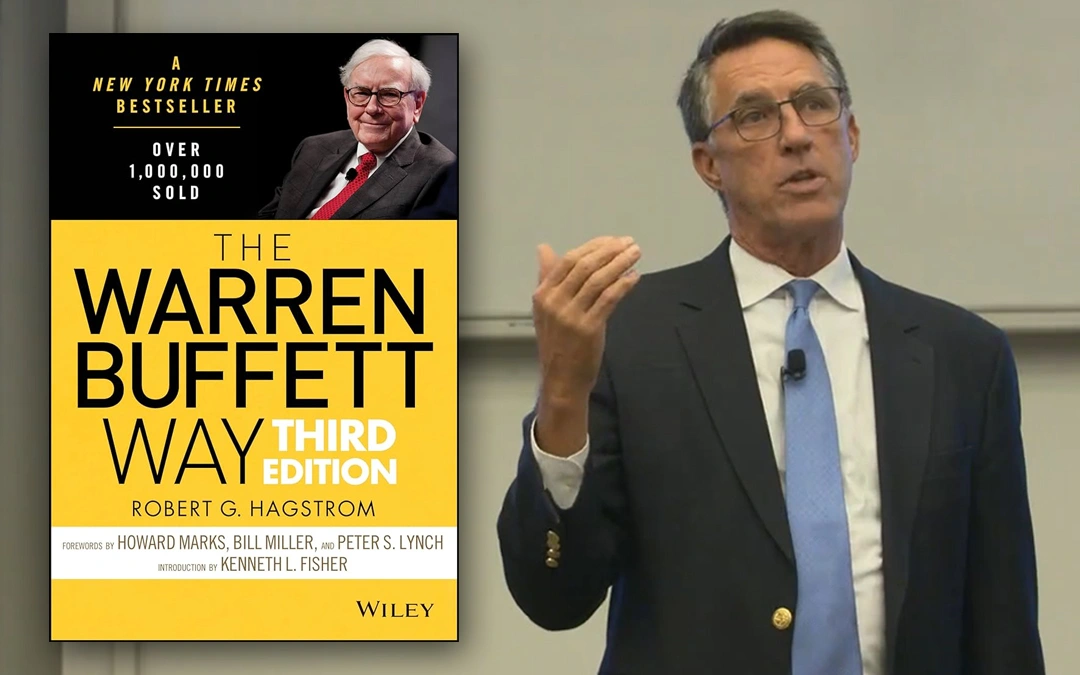
“The Warren Buffett Way: Investment Strategies of the World’s Greatest Investor” by Robert G. Hagstrom is an insightful exploration of the investment philosophy and techniques employed by Warren Buffett, one of the most successful investors of all time. First published in 1994, the book delves into Buffett’s approach to investing, offering readers a detailed look at the principles and strategies that have contributed to his remarkable success.
Key Points from “The Warren Buffett Way”:
- Value Investing Philosophy:
The book highlights Warren Buffett’s commitment to value investing, a strategy focused on buying stocks that are undervalued relative to their intrinsic worth. Buffett seeks out companies with strong fundamentals, such as solid earnings and a sustainable competitive advantage, that are trading below their intrinsic value. - The Concept of Intrinsic Value:
Hagstrom explains Buffett’s concept of intrinsic value, which refers to the true worth of a company based on its earnings potential, growth prospects, and financial health. Buffett uses intrinsic value to determine whether a stock is undervalued or overvalued, guiding his investment decisions. - Importance of Business Quality:
Buffett emphasizes investing in high-quality businesses with durable competitive advantages. Hagstrom details Buffett’s focus on companies with strong market positions, robust financials, and capable management. Buffett prefers businesses that are easy to understand and have a consistent track record of profitability. - The Margin of Safety:
The book discusses Buffett’s principle of maintaining a margin of safety, which involves purchasing stocks at a significant discount to their intrinsic value. This strategy helps protect investors from potential losses and provides a cushion against market fluctuations. - Long-Term Investment Horizon:
Buffett’s investment philosophy advocates for a long-term perspective. Hagstrom describes how Buffett’s approach involves holding investments for extended periods, allowing them to appreciate over time. This long-term view is based on the belief that high-quality businesses will deliver substantial returns in the long run. - Economic Moats:
Hagstrom explains the concept of economic moats, which refers to a company’s competitive advantage that protects it from competitors. Buffett looks for companies with wide moats, such as strong brand recognition, cost advantages, or unique products, which can sustain profitability over time. - Management Quality:
An essential aspect of Buffett’s investment strategy is evaluating the quality of a company’s management. The book details how Buffett assesses the integrity, capability, and track record of a company’s leadership team, considering them crucial factors in investment decisions. - Avoiding Speculation:
The book underscores Buffett’s aversion to speculation and market timing. Instead of trying to predict short-term market movements, Buffett focuses on the fundamental value of businesses and makes investment decisions based on thorough analysis and rational thinking. - Investment Discipline:
Hagstrom highlights Buffett’s disciplined approach to investing, including his adherence to a set of well-defined criteria for selecting investments. Buffett’s discipline involves avoiding investments outside his circle of competence and maintaining a clear focus on long-term goals. - Learning from Mistakes:
The book discusses how Buffett learns from his mistakes and continuously refines his investment approach. Hagstrom emphasizes the importance of self-awareness and adaptability in investing, drawing from Buffett’s experiences and lessons learned throughout his career.
About the Author:
Robert G. Hagstrom is a respected investment professional and author known for his work on Warren Buffett and value investing. Born in 1951, Hagstrom has a background in finance and investment management. He is the author of several influential books on investing, including “The Warren Buffett Way” and “The Warren Buffett Portfolio.” Hagstrom’s work focuses on the principles and strategies employed by Buffett and other successful investors, providing valuable insights into their approaches to investing and wealth-building. His analysis of Buffett’s investment philosophy has been widely praised for its clarity and depth, making his books essential reading for those interested in understanding the strategies of one of the greatest investors in history.