

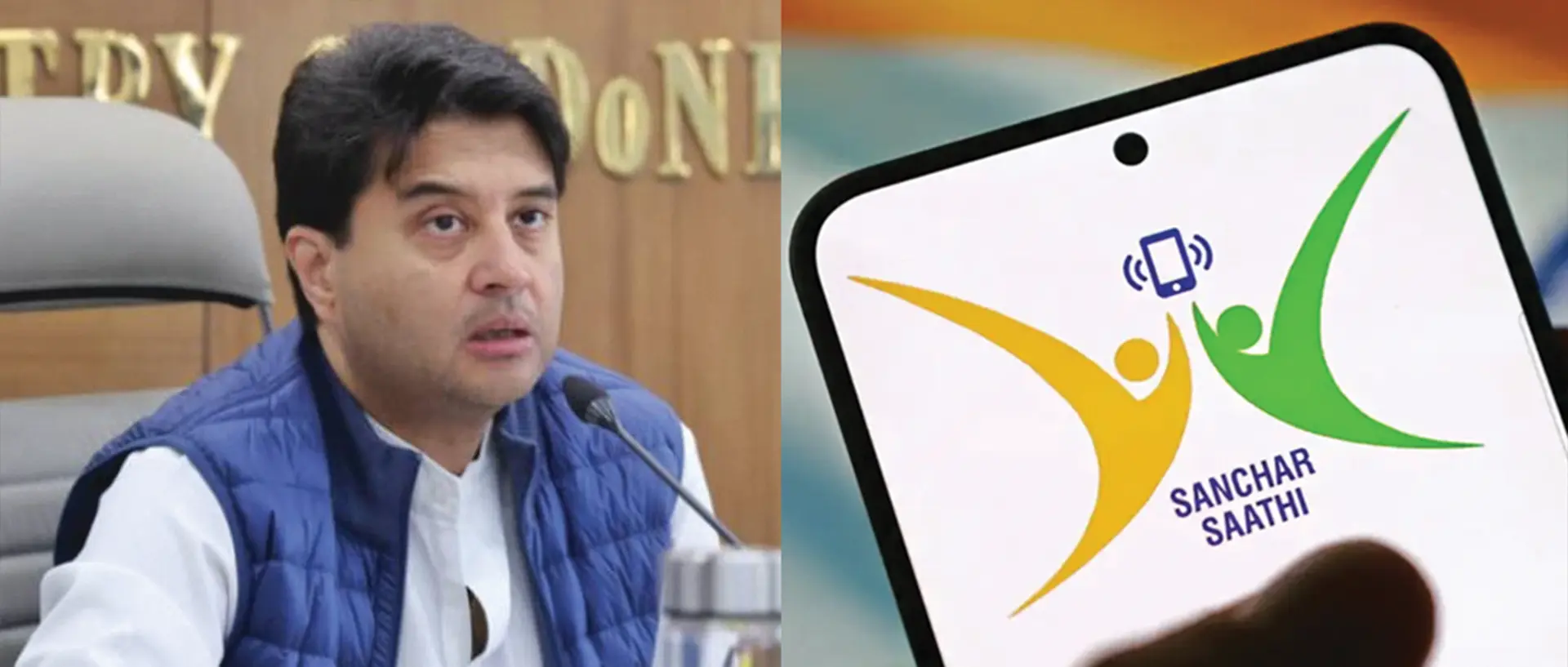
The Department of Telecommunications (DoT) has become the center of a major political and privacy row after it mandated that all new smartphones sold in India must come with the state-owned cybersecurity application, Sanchar Saathi, pre-installed. The ensuing furore over surveillance concerns and user autonomy forced Communications Minister Jyotiraditya Scindia to issue a swift and strong clarification today, Wednesday, December 3, 2025.
The Minister’s Clarification
Speaking outside Parliament and during Question Hour, Minister Scindia attempted to quell the growing public anxiety, assuring citizens that the app is primarily a consumer protection tool and is not mandatory:
- “Optional and Deletable”: Scindia repeatedly stressed that the Sanchar Saathi app is “completely optional.” He stated, “If you want to delete the app, you can… If you don’t want to use it, don’t register for it, it will stay dormant, and delete it if you want to.”
- No Snooping: He firmly ruled out the possibility of surveillance, asserting, “Snooping is neither possible nor will it happen with the Sanchar Saathi safety app.” The minister maintained that the government’s responsibility is simply to make the tool available to citizens unaware of this defense against digital fraud and phone theft.
The Source of the Controversy
The backlash was triggered by a confidential DoT order, issued on November 28, which reportedly directed smartphone manufacturers and importers to pre-install the Sanchar Saathi app within 90 days. The initial order also required that the app’s functionalities “are not disabled or restricted” by users—a phrase that critics and Opposition parties interpreted as a mandate against uninstallation.
- Privacy Concerns: Digital rights groups and the Opposition, led by the Congress, immediately criticized the move, calling the app a “snooping tool” and alleging a step toward mass surveillance. Concerns were amplified by the fact that on Android devices, the app requests “dangerous” permissions, including access to call logs, SMS, and managing phone calls, though the DoT maintains this access is limited and requires explicit user registration.
- Industry Pushback: Global players like Apple and Samsung were reportedly reviewing the order, with some manufacturers planning to push back against a mandate that they felt compromised user privacy and security protocols unique to their operating systems.
The government maintains that the app is essential for combating rising cyber fraud, helping users block stolen phones via their IMEI numbers, and identifying fraudulent SIM cards linked to their identities—a function that has successfully led to the tracing of approximately 7.5 lakh stolen phones. However, the controversy highlights the intensifying national debate over balancing digital security mandates with citizens’ right to privacy and device autonomy.
Discover more empowering stories and insightful content like this on GRISU TIMES, your go-to destination for inspiration and knowledge.
Follow GRISU TIMES on Instagram: https://www.instagram.com/grisutimes/